
A carbon store
As it grows, timber takes up large amounts of CO₂ and actively helps protect the climate.
Sustainability at X-Wood®
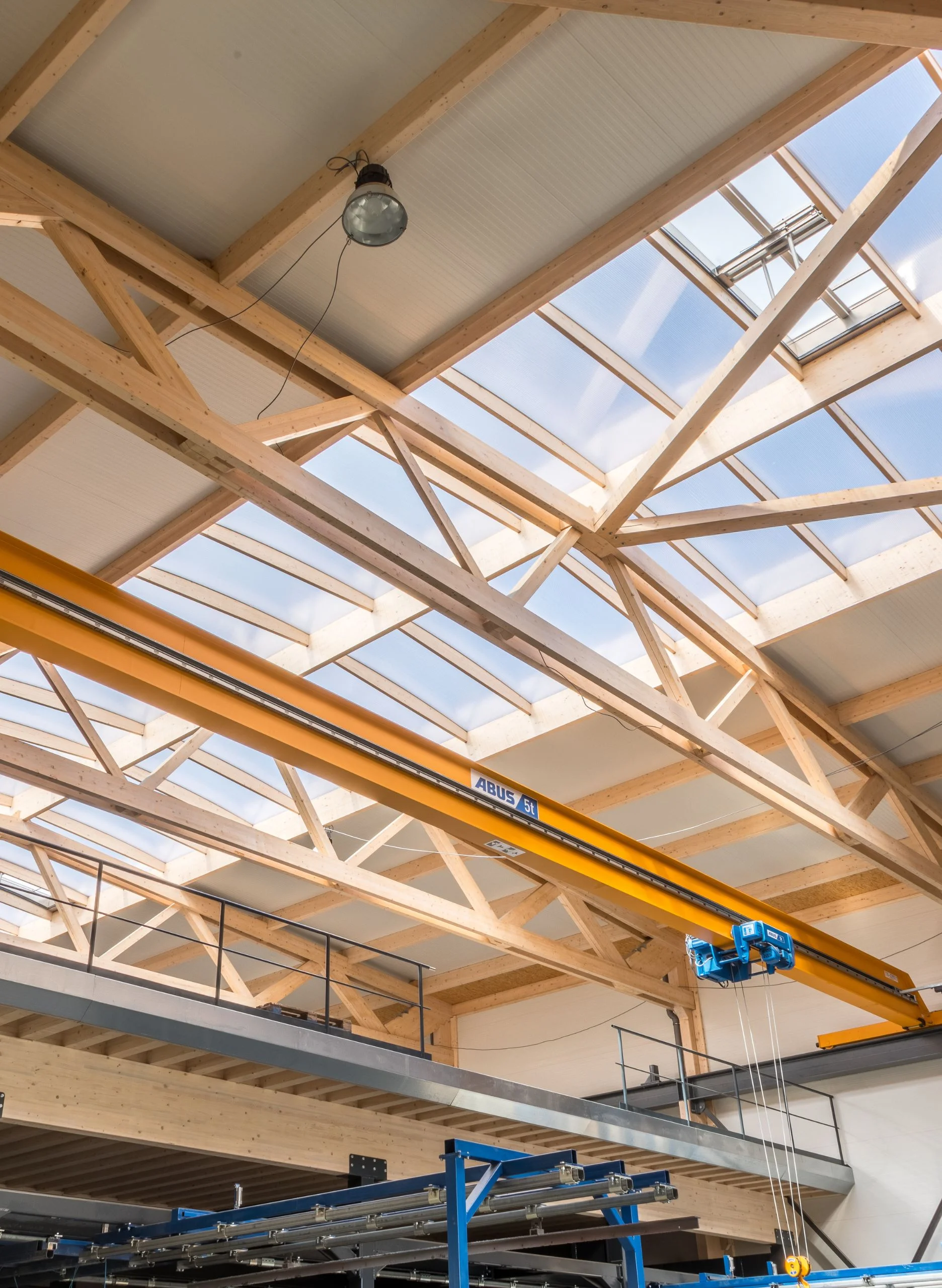
Timber is the material of the future – renewable, climate-friendly and CO₂-storing. X-Wood® builds timber-volume neutral: every cubic metre of timber built into your hall, we replant at our own expense.
Building sustainably means building with as little energy and as few emissions as possible – and with materials that grow back. Timber does both: it is renewable, processing it takes far less energy than concrete or steel, and it keeps CO₂ locked away for the whole life of the building.
With our timber structures, X-Wood® builds for longevity, stability and the highest efficiency. Our timber comes exclusively from sustainably managed forests and helps preserve global resources.
Why timber?
Compared with energy-intensive materials such as concrete or steel, producing timber is sparing of resources and energy-efficient. On top of that, timber stores CO₂ throughout its life, which makes it an ideal choice for sustainable building projects.
In figures: a timber hall needs around 0.115 m³ of timber per square metre of floor area. Every cubic metre built in keeps roughly 917 kg of CO₂ locked away — for as long as the hall stands.
Why sustainable?
As it grows, timber takes up large amounts of CO₂ and actively helps protect the climate.
Timber is a renewable material that can be managed sustainably.
Producing timber takes considerably less energy than making concrete or steel.
Building in timber causes fewer CO₂ emissions than conventional methods.
Timber is easy to recycle and supports a closed material loop.
Using certified timber protects forests and helps keep them standing in the long term.
Timber halls adapt easily, extend easily and last.
Building in timber reduces the need for energy-intensive materials and keeps the environmental load down.
Planning a new hall? Then let us talk about what a timber structure would actually mean for your project.
Discuss your projectBuilding sustainably? Let us talk.
Reforestation as climate protection
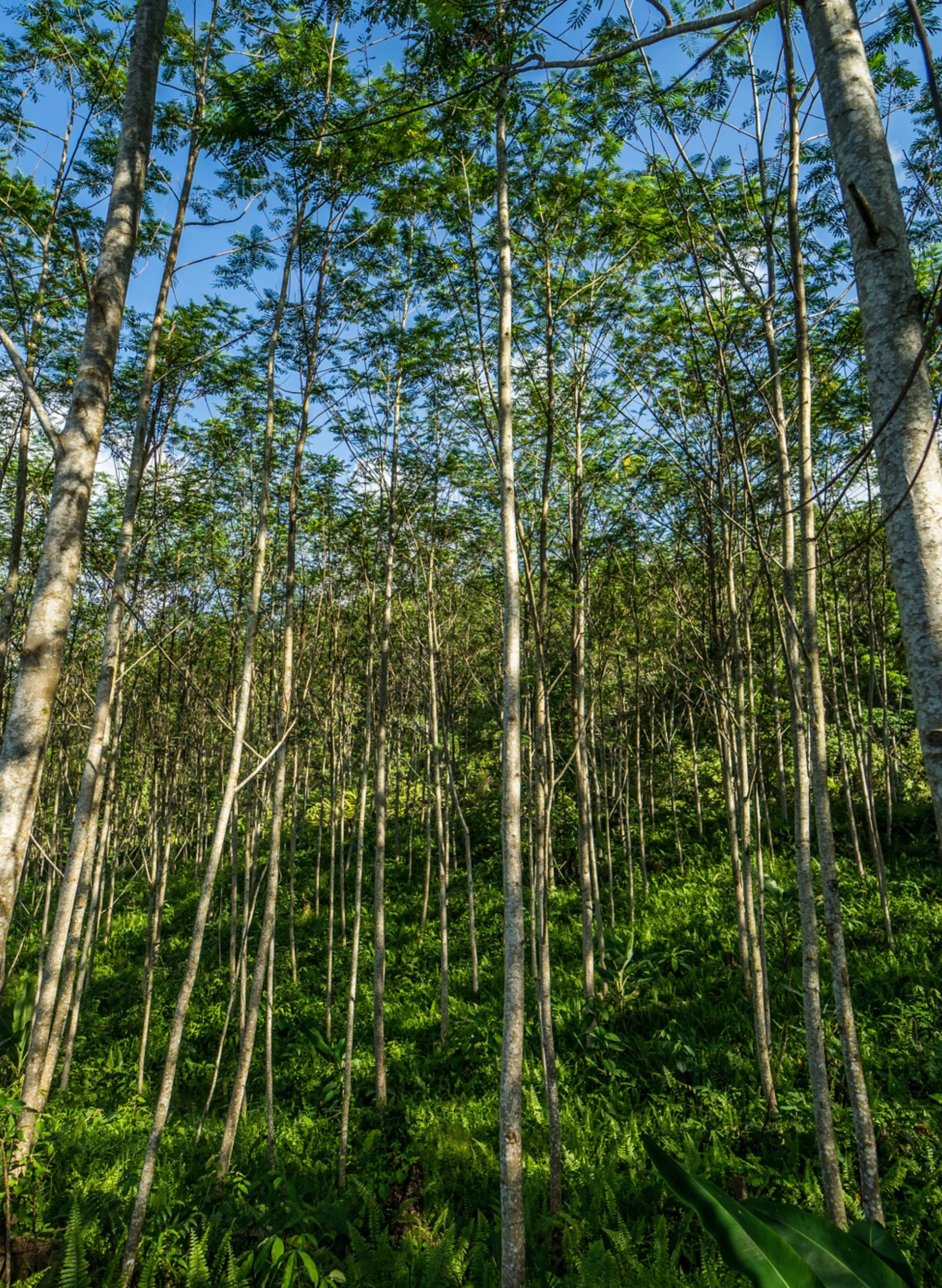
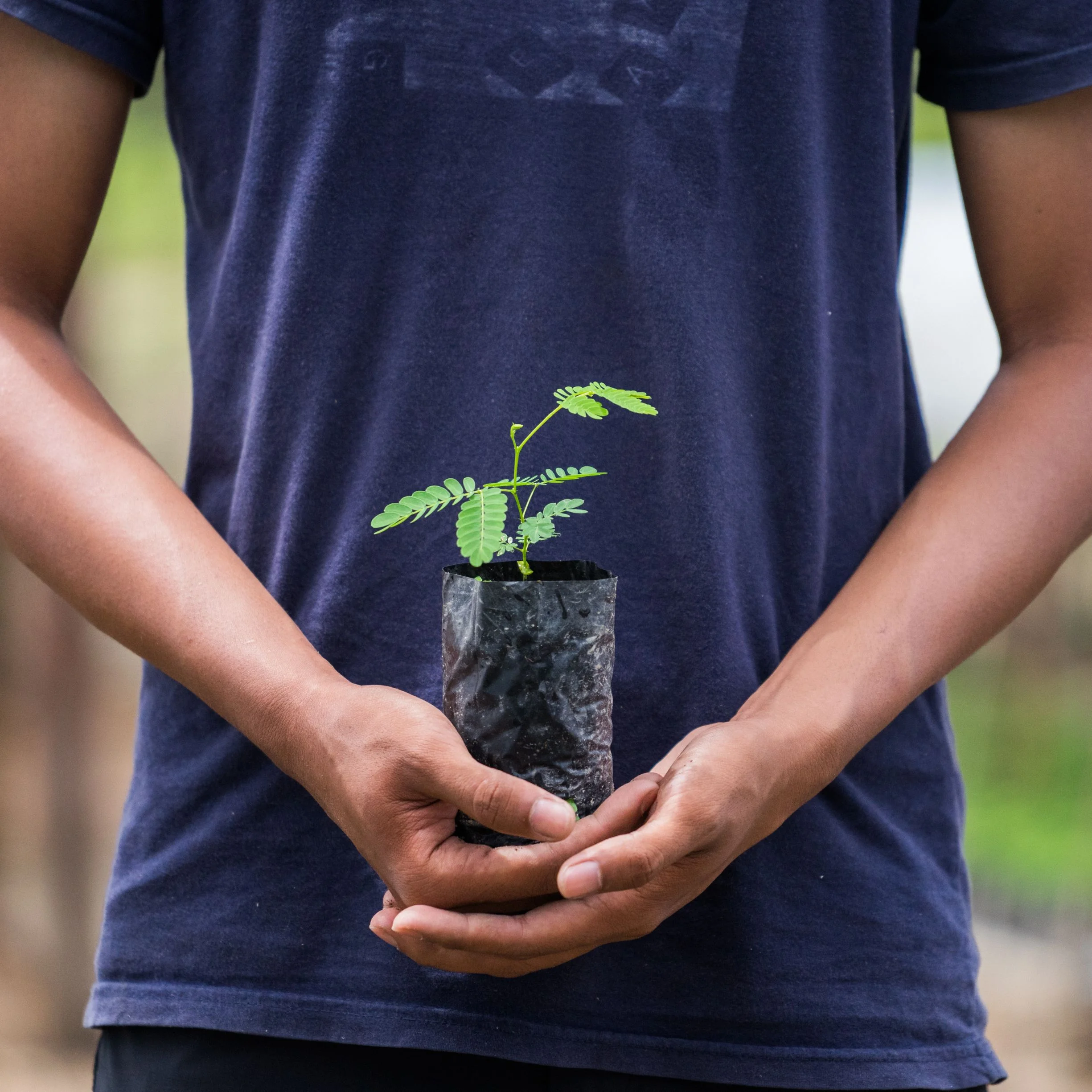
Since 2019 we have worked with Fairventures Worldwide, an organisation committed to protecting and restoring rainforest. Together we support reforestation in tropical regions such as Indonesia with fast-growing species like sengon.
These trees not only take up large amounts of CO₂; they also yield valuable timber and improve the soil. In concrete terms, the entire volume of timber we build into our halls is replanted together with the organisation.
That means we replant every cubic metre of timber built into your hall, at our own expense.


34,623
trees planted
since 2019
11,541
m³ of timber built in
since 2019
141,564
m² of halls built
since 2015
Since 2019
X-Wood® has worked with Fairventures Worldwide
A joined-up solution
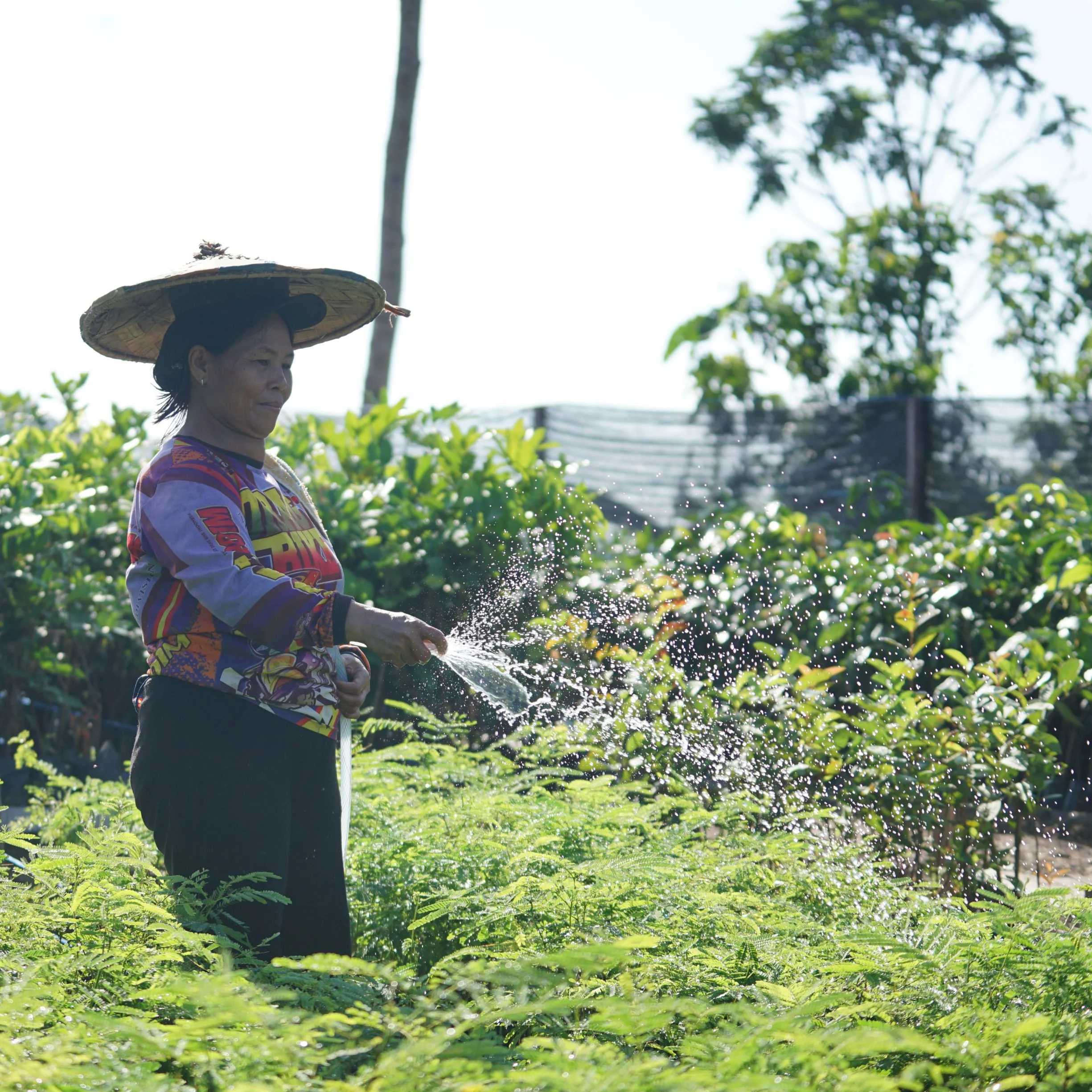
The work of Fairventures Worldwide rests on a joined-up approach that ties ecological, social and economic threads together. At its heart is the collaboration with smallholders in the tropics, who are trained in the principles of agroforestry and how to apply them sustainably.
That whole-picture approach makes sure the reforestation does not only regenerate the forests but also improves people's livelihoods locally and makes genuinely sustainable forestry possible in the long run.
How Fairventures works
Raising the seedlings
In regional nurseries, Fairventures raises seedlings, among them hardy, fast-growing species such as sengon.
Handing them to smallholders
The seedlings go to local smallholders, who plant them on their own land in agroforestry systems.
Passing on the knowledge
Hands-on workshops give the farmers the knowledge and the tools to work their land efficiently and sustainably.
Building local value
The farmers market not only timber but also fruit and other interim crops. An app developed for them helps to monitor how their trees are growing and to record data about their plots — which brings efficiency and transparency.
Why reforest in the rainforest?
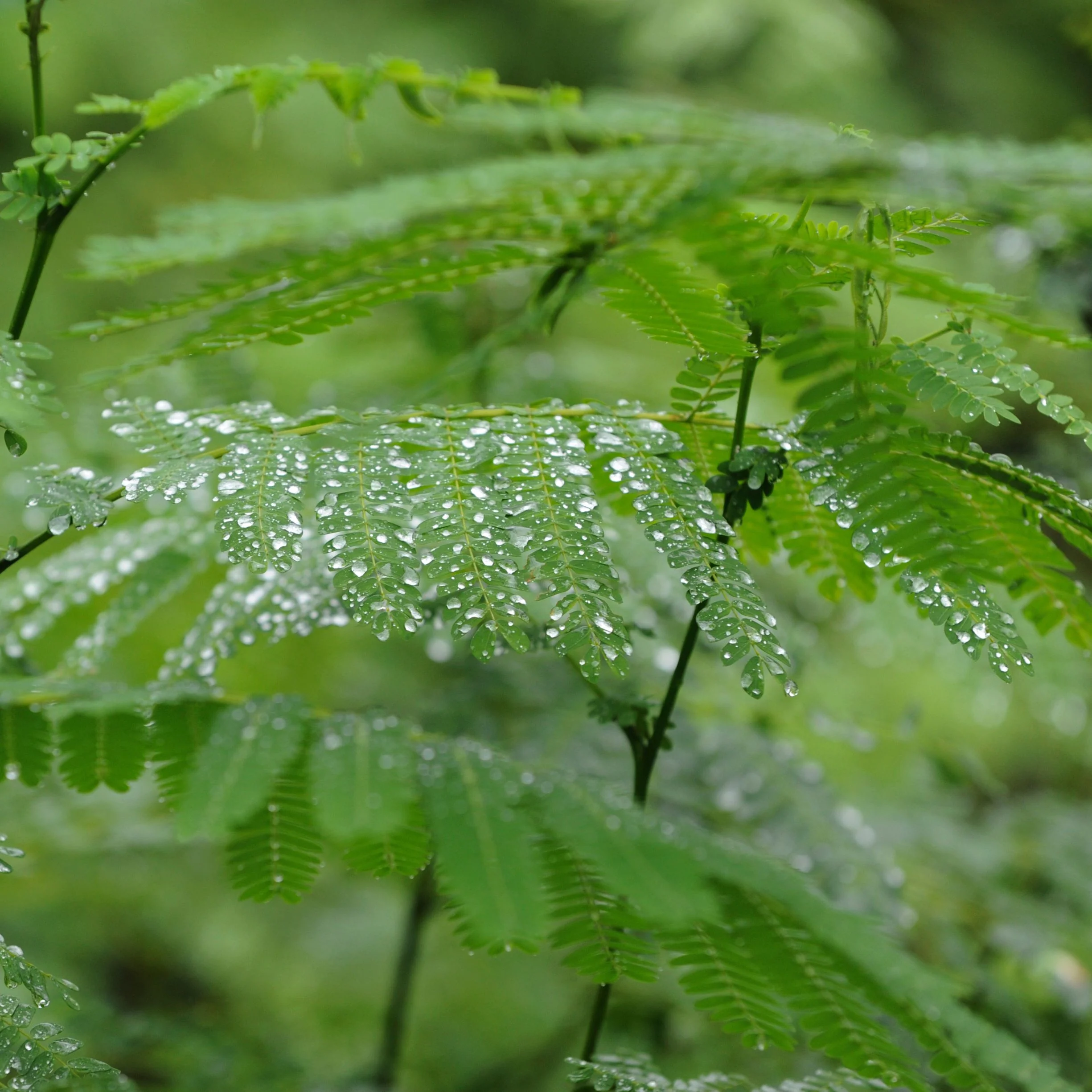
The rainforests are among the most species-rich and climatically important ecosystems on earth, yet deforestation, slash-and-burn and monocultures put them under massive pressure. Every year vast areas are lost, which not only releases enormous amounts of CO₂ but also threatens biodiversity and destroys the livelihoods of many local communities.
Through targeted reforestation in those regions we can do more than make up for the damage — we can actively help protect these unique forests. Tropical forests take up CO₂ far faster than forests in temperate zones and play a key role in regulating the global climate.
Reforestation projects also strengthen the local economy and offer communities alternatives to destructive practices such as slash-and-burn. Combining the use of timber in Europe with reforestation in the rainforest regions creates a sustainable global balance that reaches far beyond regional measures.
Three trees per cubic metre of timber
By working with X-Wood®, a climate-neutral company, you become part of a non-profit reforestation project. For every cubic metre of timber built into your hall, three new trees are planted — at our expense and as a fixed part of every hall project.
Ecology calculator
This calculator shows, by way of example, the CO₂ savings that come with building a timber hall with X-Wood®. Drag the slider to the floor area you are planning.
Planned hall area
5,000m²
575.000m³
of timber in the structure
527,275.00kg
of CO₂ stored in the building
1,725.00
trees we replant
Total CO₂ stored
1,054,550.00kg
The timber built in and the trees X-Wood® replants for it — added together.
That is the equivalent of
7,030,333.33km
by car
2,775,131.58km
by plane
75.44
times around the globe
Basis of calculation: 0.115 m³ of timber per m² of hall area; 917 kg of CO₂ stored per m³ of timber; 3 trees replanted per m³ of timber; 0.15 kg of CO₂ per kilometre by car; 0.38 kg of CO₂ per kilometre by plane. Guide figures for a rough sense of scale — the timber volume for your hall is settled at the end of the design.
Want to know how much timber your hall will need? Then let us go through your project — the volume is settled at the end of the design, and with it the number of trees.
Discuss your project
A climate-neutral company
To widen our contribution to climate protection, we have our CO₂ emissions calculated by Climate Extender. All the emissions of our business processes – from energy use to our vehicles – are recorded and offset through certified climate protection projects.
That makes us a climate-neutral company and sets a clear marker for protecting our planet.
Frequently asked questions
Producing timber takes considerably less energy than producing concrete or steel, and timber is the only one of those materials that grows back.
And there is the decisive difference: while energy-intensive materials release CO₂ as they are made, timber takes CO₂ up as it grows and keeps it stored for the whole life of the building.









Sustainability all the way through
Our approach ties the most modern timber technology to social and ecological responsibility. Sustainable timber halls from X-Wood® make economic sense — and they make an active contribution to protecting the climate worldwide.
Discuss your timber hall project